Spiritual Self-Care
Guardian Angels and Spirit Guides: A Beginner-Friendly Journaling Practice
People use “guardian angel” and “spirit guide” in different religious, cultural, and personal ways. This guide helps you compare the language, decide whether either idea belongs in your journal, and reflect without turning personal meaning into proof.

Guardian angel or spirit guide: which term fits?
| Term | Often means | Useful journal question |
|---|---|---|
| Guardian angel | A protective or caring spiritual presence, often understood through a faith tradition. | “What does protection mean within my beliefs and responsibilities?” |
| Spirit guide | A broader guiding presence or symbol; definitions vary widely across traditions and individuals. | “Whose wisdom am I imagining, remembering, or drawing upon?” |
| Inner wisdom | Your own values, experience, judgment, and emotional information. | “What do I already know, and what still needs evidence?” |
You do not have to settle a theological question before you write. If neither spiritual term feels right, use inner wisdom, reflection, or prayer. The useful decision is whether the language helps you become more honest and responsible—not whether you can prove an unseen source.
Choose your purpose before choosing a prompt
Use this practice if you are comparing spiritual language or want to explore what protection, guidance, or inner wisdom means to you. If you instead need to sort a strong impression into feelings, values, needs, and a reversible action, use the inward-listening guide. If you simply want a bank of open-ended questions, start with spiritual journaling prompts for beginners.
A 15-minute three-column journal practice
- Belief: Write what your tradition or personal worldview says about protection or guidance. If you are unsure, write “I do not know yet.”
- Meaning: Write what the idea brings up for you—comfort, caution, grief, hope, responsibility, or a memory.
- Evidence and action: List what you can verify, what remains interpretation, and one ordinary action that respects both.
Example: “I associate guardian angels with protection” belongs in the belief column. “The idea makes me feel less alone before a difficult conversation” belongs in meaning. “I will prepare my notes and ask a trusted person to check in afterward” belongs in evidence and action. The comfort can matter without becoming a guarantee about the conversation.
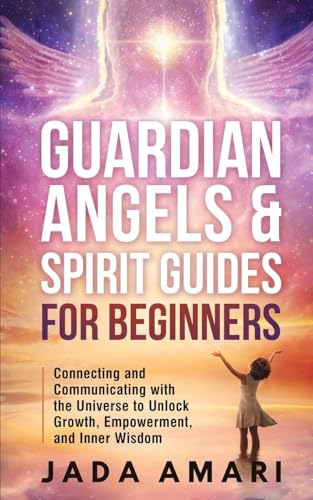
Choose free journaling or a guided book
Stay with the free practice if you enjoy creating your own prompts and want to explore without buying anything. Choose Guardian Angels & Spirit Guides for Beginners if a defined sequence and a book you can return to would make you more likely to reflect consistently. The verified Jada Amari catalog lists paperback and ebook formats; availability can change on Amazon.
See the paperback on AmazonSee the ebook on AmazonSix prompts for comparing belief and meaning
- What does “guardian angel” mean in my faith, family, or personal history?
- What does “spirit guide” mean to me, and where did that definition come from?
- Which term feels supportive, unfamiliar, or uncomfortable—and why?
- Am I seeking comfort, direction, protection, permission, or certainty?
- What facts, consent, or qualified guidance does this situation still require?
- What action would remain sensible even if my spiritual interpretation changed?
When a guided book is the better format
Use a blank notebook when you want to question definitions, compare traditions, or change your mind freely. Consider a guided book when you want a sequence of prompts and a physical place to revisit your reflections. A book can support a practice, but it cannot verify a spiritual interpretation or replace professional help.
Choosing the right next step
Stay with this free comparison practice if your main question is what guardian-angel or spirit-guide language means to you. Choose the inward-listening guide when you need to examine a particular impression. Consider guided prompts if you want a longer, repeatable exploration.
For a broader view of reflection resources, visit the spiritual growth books hub. For the exact guided option featured here, review Guardian Angels & Spirit Guides for Beginners.
- Spiritual Self-Care for Black Women: Rituals, Reflection, and Personal GrowthRelated guide
- Spirit Guides for Beginners: How to Reflect, Journal, and Listen InwardRelated guide
- Spiritual Journaling Prompts for BeginnersRelated guide
- Browse Jada Amari booksBook catalog
- Read more Jada Amari guidesArticle hub
FAQ
How do I start with guardian angels and spirit guides?
Compare the terms first, label personal meaning as interpretation, and keep practical decisions grounded in evidence.
How often should I journal or reflect?
Two or three short sessions per week is enough for many readers. Consistency matters more than filling many pages at once.
Is a workbook enough on its own?
A workbook can support reflection and consistency, but it is not a replacement for professional help when someone needs it.